
We farm our own
ground too.
1,200 acres in West Michigan. The orchard arm of a vertically integrated company, and the place we try things first.
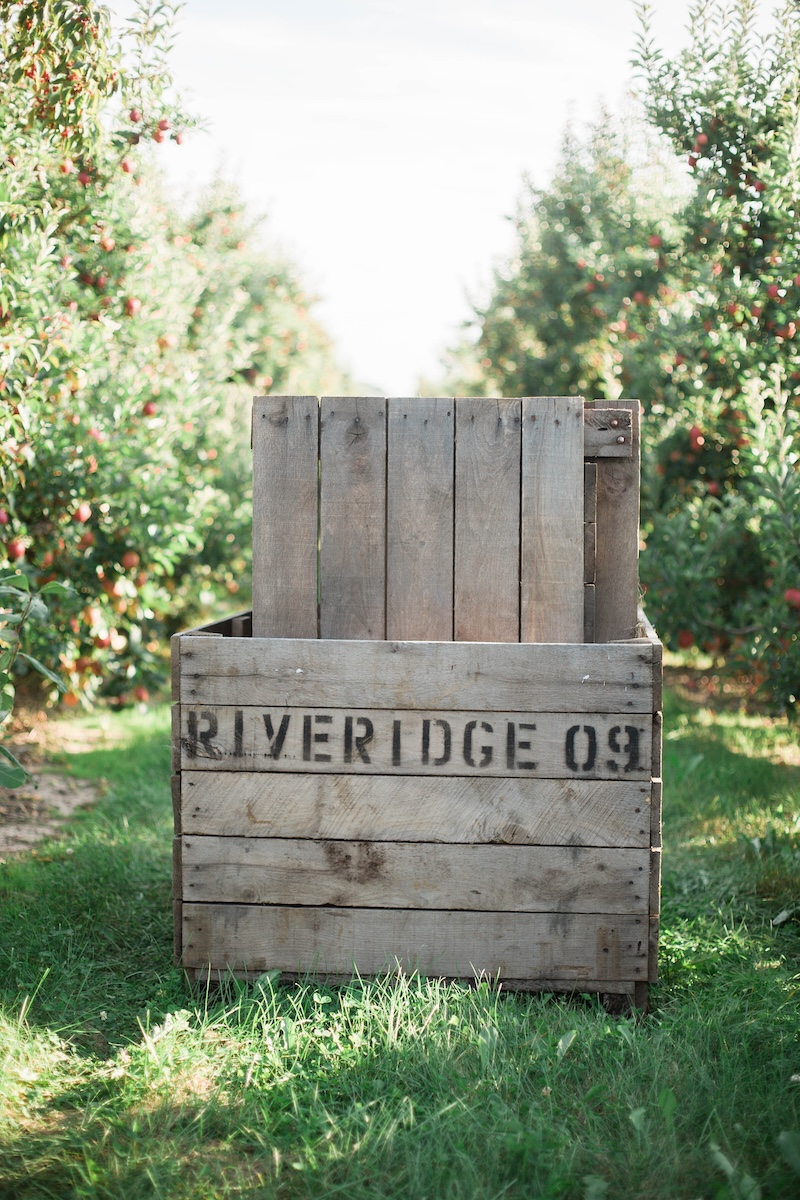
Since 1995
From 220 acres to 1,200.
Riveridge planted its first orchard in 1995 with 220 acres, all apples. Since then the production base has nearly quadrupled and diversified, adding sweet cherry and prune plum acreage along the way. Today, all orchards are planted with V-trellis systems for higher density, better light, easier harvest, and improved fruit quality.
Operations Manager Justin Finkler oversees the farms and the cider plant. He can often be found in his truck traveling between Riveridge orchards and meeting with growers.
“Every year the weather and the lake effect off Lake Michigan are different. I enjoy the challenge of being outdoors in Michigan whether we are winter pruning, engaging in frost protection measures or trying to get the job done at harvest.”
By the Numbers
An orchard, not a holding company.
Year founded
Acres in production
Location
Kent, Newaygo, Oceana and Leelanau Counties in Michigan
Commodities
Apples, sweet cherries, and prune plums
Packing facility
Riveridge Packing, centrally-located over the 1.5 miles away.
Integrated Pest Management
Spray only when there is a reason.
Pest control sprayers used to run whether there was a known problem or not. Riveridge and most Michigan orchards now employ specialized entomologists, called scouts, trained to monitor insect populations and recommend a spray only when a threat is actually detected.
Sprayers themselves have gotten smarter. Sonar targets the specific areas with pest pressure, which cuts both cost and chemical use.
“We are constantly trying new growing techniques and integrated pest management practices in order to create a more holistic growing environment,” says Don Armock, Riveridge president. “We have gone beyond routine insect scouting to participate with our neighbors in area-wide pheromone mating disruption projects with Michigan State University.”
In 2010, Riveridge became verified under the Michigan Agriculture Environmental Assurance Program, a voluntary program documenting a farm’s compliance with environmental practices.
More than honeybees.
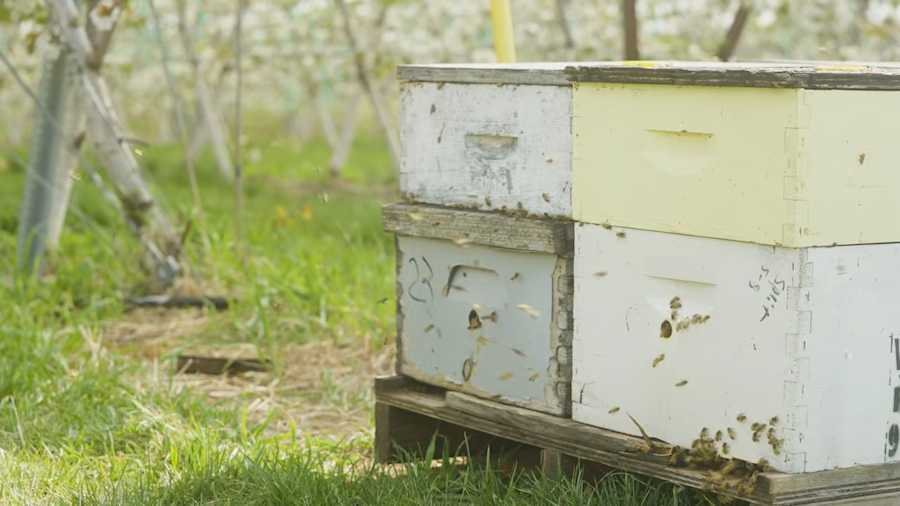
“We are also very proud of our native pollinator project, where we have some wildflowers and native habitat that attracts pollinating insects other than honeybees,” says Don Armock. “We believe the diversity in pollinators is good for the orchards in the long term.”
Barn owl houses, bat houses, kestrel houses and scarecrows (predatory birds) sit across the orchards, keeping the animals that would happily eat a ripening apple honest without reaching for anything stronger.
Building a fruiting wall.
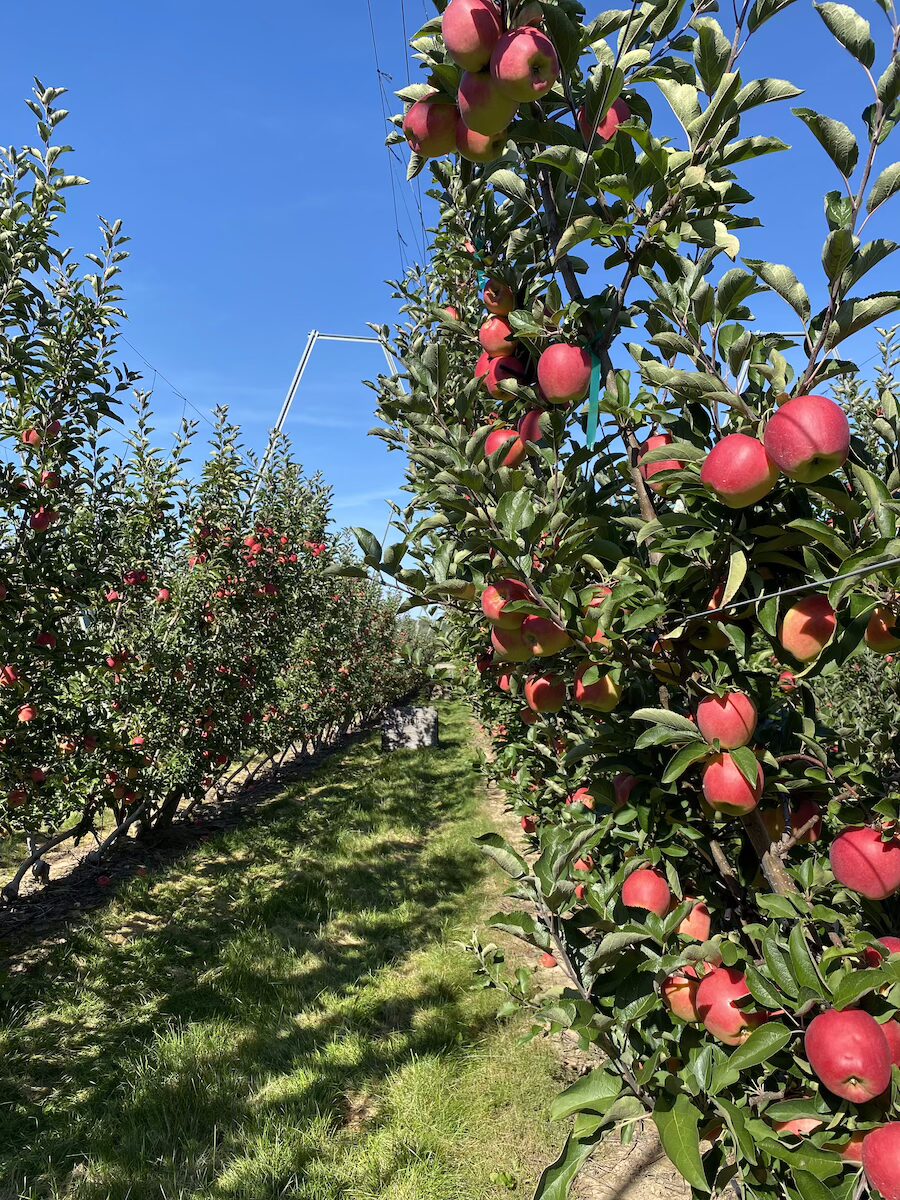
High-density planting trains trees to about 12 feet with minimal branching, producing a flat fruiting wall that makes the most of available sunlight. The newest Riveridge orchard is trained on V trellis.
“It is a little more expensive to set up initially, but the advantages add up in the long run,” Justin says. Trees planted closer together and trained to the wall produce higher quality fruit and greater yield, and they are easier to trim, thin and harvest.
“We are working hard to maximize quality and yield, minimize production costs and grow apples that are targeted in size and color to our customer base,” Don says. “We are driven to produce the fruit that consumers are looking for in the marketplace.”
Land Company questions, answered.
What is Riveridge Land Company?
The orchard arm of Riveridge Produce Marketing. Founded in 1995, it farms 860 acres of apples, sweet cherries and blueberries in Sparta, Michigan, 1.5 miles from Riveridge Packing.
Does Riveridge grow its own fruit?
Yes. Alongside the more than 150 family farms we represent, we farm our own ground through Riveridge Land Company. It is also where we test new orchard systems before recommending them to our growers.
What is a V-trellis orchard?
A high-density planting system that trains trees to roughly 12 feet with minimal branching, creating a flat fruiting wall. It captures more sunlight, raises quality and yield, and makes trimming, thinning and harvest easier.
Is Riveridge MAEAP verified?
Yes, since 2010. The Michigan Agriculture Environmental Assurance Program is a voluntary program that documents a farm’s compliance with environmental practices.